






Your Trusted
Dentist in Bedford, TX
At Maegan Elam, DDS & Associates, we provide a full range of dental services designed to meet your unique needs. From routine cleanings to more complex treatments, we focus on making every visit comfortable and efficient. We use the latest dental technology to ensure you get the best care possible, all while helping you maintain healthy teeth for years to come. Our team is dedicated to building trust and providing personalized care that leaves you with a smile you can feel confident about. Schedule a consultation today and see the difference for yourself!
Learn More


Meet
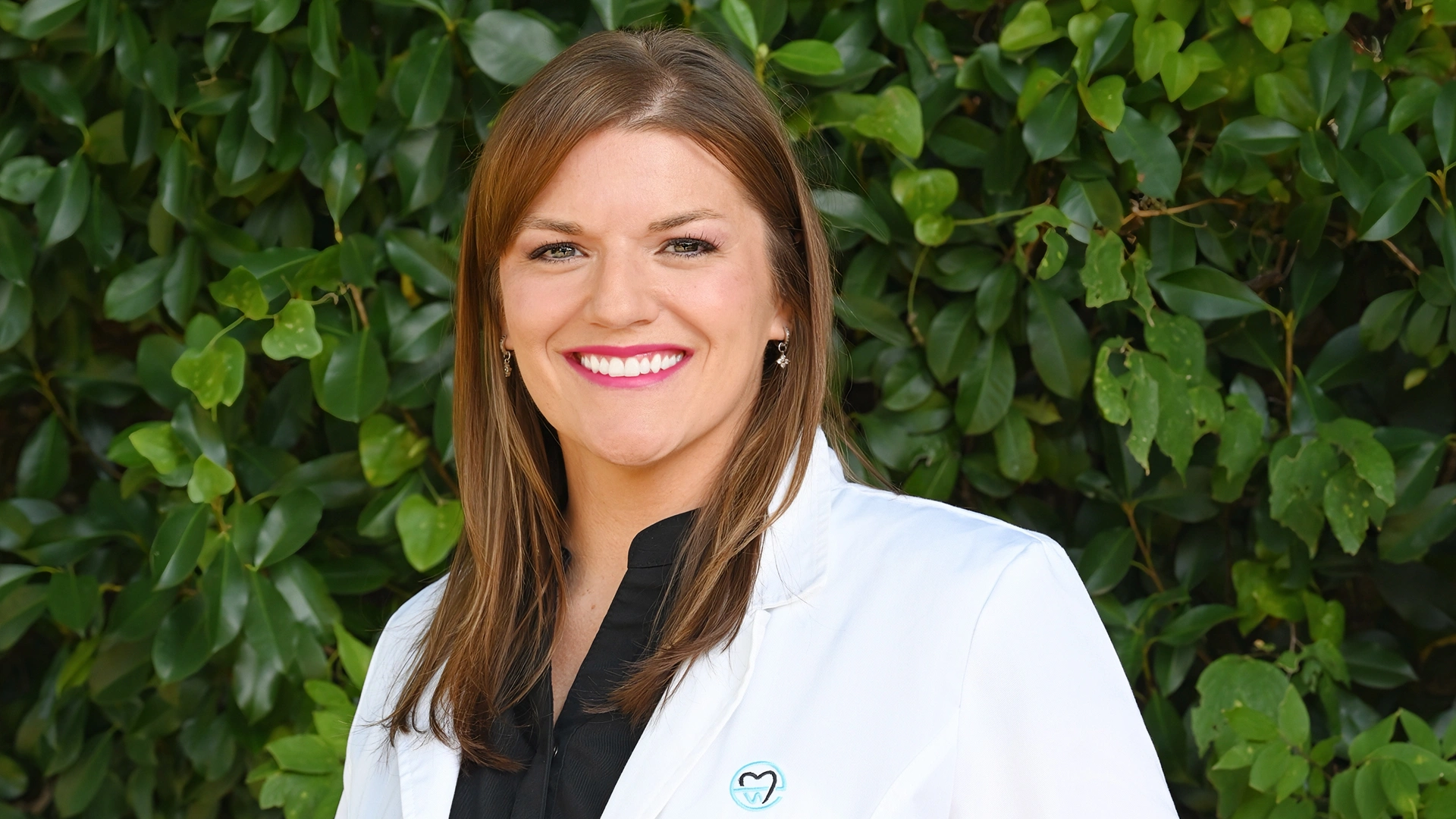
Dr. Maegan Elam
Dr. Maegan Elam was born and raised in Southlake, Texas and has served Bedford and the surrounding areas for over 10 years. She graduated dental school from the University of Texas Health Science Center in San Antonio where she was actively involved in student organizations and received an award in Clinical Excellence.
After graduation she and her husband moved back to the DFW area. In 2018 she became the owner and solo practioner of our dental office, having spent the previous 5 years here as an associate. She has a heart for anxious patients and excels in making patients feel welcome and at ease.
Dr. Elam Bio
The Mom Edit with Dr. Elam
By their first birthday, or within six months of the first tooth coming in, whichever happens first. I know that feels early when they only have two teeth and no patience. But that first visit is less about a deep cleaning and more about getting ahead of things: Your pediatric dentist will check how the teeth and jaw are developing, look for early signs of decay, and talk through brushing, bottles, and snacks. Just as importantly, your child gets to sit in the chair when nothing hurts. A kid whose first dental memory is a friendly ride in the big chair is a much easier patient at five than one whose first visit happened because something was wrong.
Keep it short, keep it positive, and watch your own vocabulary. The most helpful thing you can do is avoid words your child hasn't attached fear to yet, even reassuringly. Saying "it won't hurt" plants the idea of hurting, and the same goes for shot, drill, and pull. Try "the dentist is going to count your teeth and tickle them clean" instead. Read a picture book about a dental visit, play dentist at home with a toothbrush and a stuffed animal, and book a morning appointment when your child is rested. Bring a comfort item if it helps. And if you had a rough dental experience as a kid, please keep that story to yourself for now. Children read our faces before they hear our words.
Keep it short, keep it positive, and watch your own vocabulary. The most helpful thing you can do is avoid words your child hasn't attached fear to yet, even reassuringly. Saying "it won't hurt" plants the idea of hurting, and the same goes for shot, drill, and pull. Try "the dentist is going to count your teeth and tickle them clean" instead. Read a picture book about a dental visit, play dentist at home with a toothbrush and a stuffed animal, and book a morning appointment when your child is rested. Bring a comfort item if it helps. And if you had a rough dental experience as a kid, please keep that story to yourself for now. Children read our faces before they hear our words.
Yes. Baby teeth do real work, and some of them stay in place until age 12. They hold space for the permanent teeth underneath, so losing one early can let neighboring teeth drift and crowd out the adult tooth that was supposed to arrive there. They also matter for chewing and for speech development. This is also why I recommend treating cavities in baby teeth rather than waiting them out. Decay doesn't pause, and an infected baby tooth can hurt, cause an abscess, and even damage the permanent tooth forming right beneath it. The good news is that early cavities in baby teeth are usually simple to fix.
Keep brushing anyway. A two minute struggle twice a day is genuinely better than skipping it. This is one of the most common questions I get, and I'll be honest as a mom: it is a phase for most kids, not a parenting failure. A few things that help: brush while they're lying down with their head in your lap so you can actually see, let them hold their own toothbrush while you use a second one, brush your teeth in front of them, and use a song or timer so there's a clear finish line. If the fight is over toothpaste flavor, try a different one. And if you're only winning one round a day, make it the bedtime round.
Use a smear the size of a grain of rice from the first tooth until age 3, then a pea sized amount from ages 3 to 6. Fluoride toothpaste in those amounts is safe and is the single most effective thing you can do at home to prevent cavities. The concern parents have usually heard about is fluorosis, meaning faint white spots on permanent teeth from swallowing too much fluoride over time, and the small amounts above are exactly what keep that from happening. Young kids can't spit reliably, so dispense the toothpaste yourself rather than handing over the tube. If your family drinks filtered water, it is not a source of fluoride, so I strongly recommend fluoride varnish application at cleaning appointments.
As soon as two teeth touch each other. For some kids that's around age 2 or 3, and for others with naturally spaced teeth it may not be until later. The reason is simple: a toothbrush can't reach where two teeth press together, and that contact point is where cavities in kids most often start. Floss picks are much easier than string floss for reaching a small mouth, and there's no shame in using them. Once a day, at night, is plenty. Expect to be doing the flossing yourself until somewhere around age 8 to 10, when their hand coordination catches up.
Not before age 3. Most children stop on their own, and sucking is a normal way for babies to self soothe. What dentists watch for is sucking that continues past ages 3 to 4, because that's when consistent pressure can start to change the shape of the palate and push the front teeth forward. Intensity matters too: a child who rests a thumb in their mouth is at less risk than one who sucks vigorously. If you're working on stopping, gentle beats punitive. Reward charts, replacing the habit at the moments it shows up most (car rides, bedtime), and a lot of praise all help. Bring it up at your next visit and you and your pediatric dentist can look together at whether it's affecting the bite yet.
It's one of the most common causes of early childhood cavities, and it's worth changing. When milk, formula, or juice pools around the teeth overnight, the natural sugars in it feed cavity causing bacteria for hours while saliva flow, your child's built in rinse, is at its lowest. The same goes for a sippy cup of juice or milk carried around all day. It's constant exposure rather than a single dose. Water is fine any time, day or night. If you're weaning off a bedtime bottle, try diluting it with more water each night over a couple of weeks, and move the last milk feeding to before toothbrushing rather than after.
Cold pressure works better than anything else: a chilled (not frozen) teething ring, a clean cold washcloth to chew on, or firm gum massage with a clean finger. Teething typically starts around 6 months and comes with drooling, gnawing, and fussiness. What it does not cause is a high fever, diarrhea, or a rash beyond mild drool irritation. If you're seeing those, it's worth a call to your pediatrician rather than chalking it up to teeth. Please skip benzocaine gels for babies and toddlers and skip amber teething necklaces entirely. Both carry real safety risks.
As soon as two teeth touch each other. For some kids that's around age 2 or 3, and for others with naturally spaced teeth it may not be until later. The reason is simple: a toothbrush can't reach where two teeth press together, and that contact point is where cavities in kids most often start. Floss picks are much easier than string floss for reaching a small mouth, and there's no shame in using them. Once a day, at night, is plenty. Expect to be doing the flossing yourself until somewhere around age 8 to 10, when their hand coordination catches up.
No. Shark teeth are common and usually resolve on their own. It happens when the permanent tooth erupts before the baby tooth's root has fully dissolved, most often with the lower front teeth around age 6. In most cases the baby tooth loosens and falls out within a few weeks, and the tongue naturally nudges the new tooth forward into place. Encourage your child to wiggle the baby tooth. If it's still firmly in place after two or three months, or if the permanent tooth looks like it's being blocked, come see us. Removing the baby tooth is a quick, simple visit.
Let your child wiggle it out themselves. That's the safest approach. A tooth that's ready will come out with very little effort and very little blood. Pulling one before its root has dissolved can hurt, bleed more, and occasionally leave a root fragment behind. Have them wiggle it with a clean finger or tongue throughout the day. Most teeth fall out on their own within a week or two once they get genuinely loose. See your dentist if the tooth has been loose for months without progress, if there's swelling or pus around it, or if it got loose from a fall rather than on its own schedule.
Both are completely normal. Permanent teeth are naturally darker than baby teeth. Baby teeth are unusually white, so the new ones look yellow by comparison, especially when they sit right next to each other during the years when your child has both. That contrast fades as the rest of the baby teeth are replaced. The size is normal too. Permanent teeth erupt at full adult size into a jaw that's still growing, which is why kids often go through an awkward stage before their face catches up. What I don’t want to see is a single tooth that's noticeably darker than its neighbors. That can signal trauma or a nerve issue, so let us take a look.
Sealants are a thin protective coating painted into the deep grooves of the back teeth, and they're one of the best cavity prevention tools we have for kids. Those grooves are narrower than a single toothbrush bristle, which means they collect food and bacteria that brushing simply can't reach. Sealing them off dramatically reduces decay in the teeth where kids get most of their cavities. Application takes a few minutes per tooth, requires no drilling and no numbing, and we typically place them on the permanent molars soon after they come in, usually around ages 6 and 12. We check them at each visit and can repair one if it chips.
Yes. Modern digital dental X rays use a very small amount of radiation, less than what your child receives from a day of ordinary background exposure, and we use a lead apron and thyroid collar every time. Frequency depends on the individual child. Kids with a history of cavities or crowding may need bitewing images every 6 to 12 months, while a child with low risk and well spaced teeth may go longer. Images let us see between touching teeth, watch permanent teeth develop, and catch problems while they're still small and inexpensive to fix. I'm always happy to explain why I'm recommending a particular set, so please ask.
Around age 7 for an evaluation, even though most kids won't start treatment anywhere near that early. By 7, enough permanent teeth have arrived to reveal how the bite is developing. Crossbites, severe crowding, jaw growth differences, and habit related issues all show up at that stage. Catching them early sometimes means a short, simple intervention now instead of a much longer one later. That said, an early evaluation very often ends with a plan to simply recheck next year, and that's a perfectly good outcome. I keep an eye on your child's bite at every checkup and will tell you when I think it's time.
Yes, for any sport with contact or a flying object, and that includes basketball, soccer, and skateboarding, not just football and hockey. Dental injuries in kids are common, expensive, and often permanent, since a knocked out or fractured adult tooth means a lifetime of dental work. A custom fitted mouthguard is far more comfortable and protective than a boil and bite version from the sporting goods store, and comfort matters because a guard only works when it's actually being worn. If your child has braces, a mouthguard is not optional. It protects the lips and cheeks from the brackets as much as it protects the teeth.
Not necessarily, but I would want to find out if there is a root cause for the grinding. What I look for at checkups is whether the wear is outpacing normal: flattened chewing surfaces, sensitivity, jaw soreness or headaches in the morning, or a child who complains about it. Night guards are rarely the answer for a growing child, since a guard can interfere with teeth that are still erupting. I think an airway issue is almost always the underlying cause, so I send these patients to an airway-centric orthodontist for evaluation. I work with several airway-centric orthodontists in the area who can evaluate this for us. See the next question.
The connection runs both directions, and it's worth taking seriously. Habitual snoring and daytime mouth breathing are not normal in children and they're often tied to enlarged tonsils or adenoids, allergies, or a narrow airway. The dental signs I watch for are a high narrow palate, a longer face shape, crowding, front teeth that don't meet when the back teeth are together, and chronically dry, inflamed gums. Sleep matters here beyond the teeth. Children who sleep poorly often present as irritable, hyperactive, or unfocused rather than tired. If I see these signs, I'll say so and help coordinate with your pediatrician, an ENT, or an orthodontist. Sometimes widening a narrow upper jaw during growth makes a real difference.
They're one of the worst things I see for kids' teeth, and most parents are genuinely surprised to hear it. The problem isn't the amount of sugar, it's the stickiness. A gummy packs into the grooves of the molars and stays there feeding bacteria long after the snack is over, which is the same reason fruit snacks, dried fruit, and gummy candy do more damage than a cookie. Timing makes it worse, since vitamins are usually taken at bedtime or right after a meal and then nobody brushes again. If your family relies on them, give them with a meal and brush afterward, or switch to a chewable tablet or liquid form.
We usually start evaluating them with X rays around ages 16 to 18, well before symptoms appear. Whether they need to come out depends on whether there's room for them to erupt straight and be cleaned. Some people have plenty of room, and there's no reason to remove a healthy, functional tooth. When they're impacted or angled, they can crowd, decay, or cause infection in the gum tissue behind the last molar. If removal is recommended, doing it in the late teens usually means an easier procedure and faster healing than waiting until the roots are fully formed. Pain, swelling, or a bad taste at the back of the jaw is worth a call sooner rather than later.
I generally wait until all the permanent teeth have erupted, usually around ages 14 to 16, and until any orthodontic treatment is finished. Whitening a mouth that still has baby teeth or braces gives uneven results, because the areas under brackets stay their original shade. Teen enamel is also more prone to sensitivity, so I usually start with a lower strength professional option and take it slowly. The bigger reason to check in with us first is that not all discoloration responds to whitening. Stains from trauma, medication, or enamel defects need a different approach entirely, and drugstore kits won't touch them. I make customized trays that hold whitening gel, which allows a more personalized approach to the whitening process. The trays can be used for years and you’d only need to purchase gel when touchups are needed.
More than most parents realize, and I see it in teenage mouths regularly. Vaping dries out the mouth, and reduced saliva means less natural protection against decay. Vape aerosol is also sticky and sweet, which feeds cavity causing bacteria, and nicotine reduces blood flow to the gums. Energy drinks and sports drinks are highly acidic, and sipping one over an hour bathes the enamel in acid the entire time. Enamel doesn't grow back. Here's a practical middle ground if quitting isn't on the table: drink it in one sitting rather than sipping, rinse with water afterward, and wait 30 minutes before brushing so you're not scrubbing softened enamel.
Permanent white scars on the front teeth, and I mean permanent. When plaque sits around a bracket for months, it pulls minerals out of the enamel and leaves a chalky white square exactly where the bracket was. Nothing is more heartbreaking than the day the braces come off and a beautifully straight smile is outlined in white boxes. Those marks don't brush off and often need cosmetic treatment later. Swollen, bleeding, overgrown gums and slower tooth movement come with the territory too. What actually works with teenagers is showing rather than lecturing: disclosing tablets that dye the plaque bright pink, before and after photos of decalcification, an electric brush and a water flosser to cut the time it takes, and a fluoride rinse at night. I'm also glad to see teens in braces more often than every six months.
It isn't required, but for most kids I'd say yes, especially once they're old enough to rush the job. Electric brushes remove more plaque than manual brushing in the average hand, and the built in two minute timer settles the nightly argument about whether they actually brushed long enough. Pressure sensors help with teens who scrub too hard. Honestly, most of the benefit is behavioral: kids brush longer because it feels like using a gadget. Kid sized heads with soft bristles are fine from around age 3 with supervision. That said, technique still beats technology. A manual brush used carefully for two minutes will always outperform an electric brush waved around for twenty seconds. Replace the head every three months either way.
In children it's almost always something local and fixable, and the tongue is the usual culprit. Bacteria collect on the rough surface at the back of the tongue, so add gentle tongue brushing to the routine before you worry about anything else. Dry mouth is the next most common cause, which is why morning breath is worse and why mouth breathers and kids who don't drink enough water notice it more. Food trapped between teeth, a cavity, or inflamed gums can all contribute. One more that surprises parents: in toddlers, persistent bad breath from one side of the nose can mean a small object is lodged up there. If breath stays bad after we've ruled out dental causes, tonsil stones, allergies, sinus drainage, and reflux are worth raising with your pediatrician.
For a knocked out permanent tooth, act within 30 minutes. That's the window that matters most. Pick the tooth up by the crown, never the root, rinse it gently with milk or saline if it's dirty (don't scrub it), and try to place it back in the socket. If you can't, put it in a cup of milk and get to us immediately. Do not reimplant a knocked out baby tooth. Doing so can damage the permanent tooth developing underneath. For a chipped tooth, save the fragment in milk if you can find it, rinse the mouth with warm water, and use a cold compress for swelling. Call us either way, even if your child seems fine. Because time is of the essence, if you can’t get ahold of your dentist immediately, there are several emergency dental clinics in the area that are open late 7 days a week. My favorite clinic is Dental Emergency Care USA off Heritage Trace Pkwy (817) 440-7577.
No, and I want to take this one seriously, because I hear the guilt behind it constantly. Genetics do play a role in enamel strength, saliva composition, and tooth shape. But the largest factors are ones you can actually control: what your family eats and drinks, how often, and how consistently teeth get brushed and flossed. The biggest lever is frequency rather than quantity. Every time your child eats or drinks something other than water, their mouth stays acidic for roughly 20 minutes, so a candy bar in one sitting is gentler on teeth than a bag of crackers grazed over an afternoon. Cluster snacks into set times, keep water as the between meals drink, and stay on a regular checkup schedule. That combination beats genetics most of the time.
Stunning Smile Transformations
A picture is worth a thousand words. We could give you a thousand reasons why our dental office is right for you, but we’d rather show you our actual results. Check out the dazzling smiles we helped to create, and call to schedule your dental checkup or consultation today.


Comprehensive Dental Care Tailored for Every Smile
At Maegan Elam, DDS & Associates, we provide comprehensive dental care tailored to every smile — from preventive visits to advanced restorative treatments. Our personalized approach ensures each patient receives the focused attention needed to achieve and maintain lifelong oral health. Using the latest technology and techniques, we make every procedure — whether a routine cleaning or specialized treatment — as comfortable and efficient as possible. Beyond the chair, we empower our patients with the knowledge to care for their smiles between visits, emphasizing prevention and long-lasting results.

Dental Veneers
See how we’ve helped our patients achieve the smiles of their dreams.
Learn More

Implant Restoration
Restore your implant’s look and feel—so you can smile with confidence again.
Learn More

Full Mouth Rehabilitation
Transform your oral health and smile function with our expert full mouth rehabilitation.
Learn More
We Make Dentistry More Comfortable
Advanced Dentistry
We use the latest dental innovations to ensure precise, efficient, and comfortable treatments for every patient.
Modern Technology
Experience the difference of state-of-the-art digital tools that enhance accuracy, safety, and overall care.

Comfortable Office
Our inviting, modern space is designed to help you feel relaxed and at ease from the moment you arrive.
Friendly Team
Our caring dental professionals make every visit a positive experience with genuine warmth and personalized attention.